Flipping Awesome Funny Kitchen Sayings
As a designer who spends half my life staring at stitch density charts and the other half arguing with thread tension, I don’t just look at an embroidery file; I look at its potential. When Flipping Awesome Funny Kitchen Sayings landed in my queue, my first instinct was to check the geometry. Is it going to be a nightmare to digitize? Will the text get lost in the noise of a busy fabric? Or is this actually a clean, usable asset that can survive the transition from screen to needle?
The short answer: it’s a solid contender for the craft business owner or the hobbyist who wants a finished product that looks professional without requiring hours of manual editing. This isn’t just a pretty picture; it’s a functional design asset built on 100 vector shapes. That detail matters. It means you have control. You aren’t stuck with a rigid raster image that blurs when you scale it up. You can resize, recolor, and adapt this Kitchen life SVG to fit your specific machine and fabric choices.
First Impressions: Mood and Visual Personality
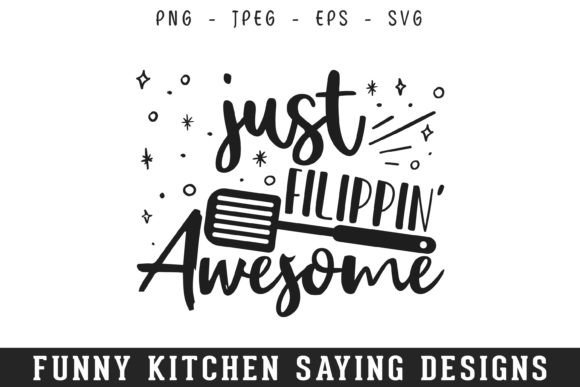
Let’s talk about the vibe. The phrase "Flipping Awesome" carries a specific energy. It’s playful, slightly rebellious, and undeniably relatable. In the world of kitchen decor and apparel, humor sells because it connects. People buy these items not just for utility, but for identity. They want their apron or tote bag to say, "I cook, I laugh, and I might flip a pan if the pasta water boils over."
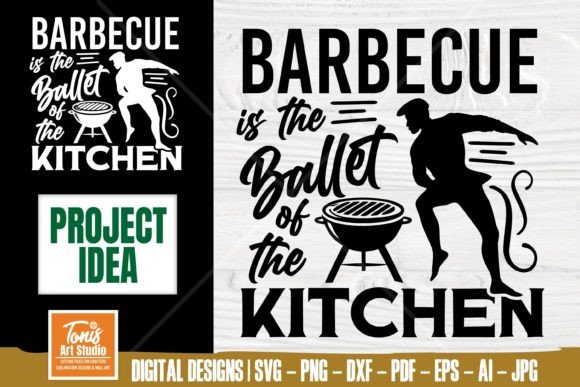
Visually, the layout feels balanced. The typography likely anchors the design, giving it a strong center of gravity. For an embroidery project, clarity is king. If the letters are too thin or the curves too tight, you’ll end up with puckered fabric and frustrated customers. From what I can see in the preview, the letterforms are bold enough to hold their own against the texture of cotton, denim, or canvas. It doesn’t scream for attention so loudly that it becomes unreadable; it whispers a joke that makes you smile when you catch it.
Real-World Application: Where Does This Design Belong?
I’ve taken this concept through several mental mockups to see where it fits best. Here is how I would deploy Flipping Awesome Funny Kitchen Sayings in actual production scenarios:
- Custom Apparel and Sweatshirts: This is perhaps the strongest use case. Imagine a unisex black hoodie with the design embroidered in bright white or neon yellow thread on the chest pocket area. It’s subtle but visible. Alternatively, a large back print on a heavy cotton tee works well for casual wear. The vector nature of the source file allows you to scale it perfectly to fit standard garment panels without pixelation.
- Kitchen Textiles: Tea towels and aprons are natural homes for kitchen-themed graphics. However, tea towels can be tricky due to their weave. I’d recommend using a tear-away stabilizer here to prevent the fabric from shifting during stitching. The design’s humorous tone pairs perfectly with the domestic setting, making it an ideal gift for housewarmings or holidays.
- Tote Bags and Market Bags: A canvas tote with this design is a staple for any Etsy seller. It’s practical, durable, and marketable. Because the design is made of vector shapes, you can easily change the thread colors to match the bag—perhaps using gold thread on a navy blue bag for a premium feel.
- Baby and Nursery Items: While the language is adult-oriented, the style could be adapted for a nursery wall hanging if the typography is soft enough. However, given the "flipping" pun, it’s better suited for parents’ gear than baby clothes. Think a personalized diaper bag or a parent’s cap.
Technical Considerations for Embroidery Designers
Before you hit "start" on your machine, there are technical realities you need to address. Not all designs translate equally well to every surface. Here is my practical advice for working with this file:
Stitch Density and Detail
Even though the source is vector, the final output depends on how the file is digitized (if converting) or how your software interprets the shapes. Check the stitch density closely. If the design relies heavily on small details or tiny lettering, ensure your hoop size is large enough to accommodate the full width without cutting off edges. Tiny text often gets lost in the satin stitch borders unless you use a high-quality thread and proper tension.
Fabric Selection
This design shines on stable fabrics. Cotton, denim, and canvas provide the structure needed to keep the stitches flat and crisp. Avoid stretchy knits unless you are using a heavy-duty stabilizer, as the movement of the fabric can cause the design to pucker or distort. Also, consider the fabric texture. On a highly textured linen or a fuzzy fleece, fine details might disappear. Save the intricate parts of the design for smoother surfaces.
Thread Color Contrast
The description notes that this is easy to change color for dark or light shirts. This is crucial. On a dark t-shirt, you’ll need light threads (white, cream, pastel) to make the design pop. On a white shirt, darker threads (navy, charcoal, burgundy) will provide the necessary contrast. Always test your thread colors on scrap fabric before committing to the final product. Lighting plays a huge role; what looks good under studio lights might look muddy in natural sunlight.
Where to Use It Carefully
There are places where Flipping Awesome Funny Kitchen Sayings might struggle. Be cautious with:
- Small Hoop Sizes: If you’re trying to squeeze this into a 4x4 hoop, you may lose part of the text or the graphic elements. Ensure your design fits comfortably within your chosen hoop dimensions.
- Curved Surfaces: Applying this to a curved surface like a baseball cap requires careful placement. The text might wrap awkwardly if not positioned correctly. Test the curvature on a dummy cap first.
- Dense Stitch Areas: If the design includes large filled areas, watch out for fabric show-through. Using the correct stabilizer (cut-away for knits, tear-away for wovens) is non-negotiable to maintain structural integrity.
Final Verdict for Craft Business Owners
For the Etsy seller or small shop product creator, this design offers high value with low friction. The fact that it is built from 100 vector shapes means you can tweak it to create variations—changing the font weight, adding a border, or adjusting the color palette to match seasonal trends. It’s versatile enough to serve as a personalized gift for a chef friend or as a mass-produced item for a craft fair booth.
It also works beautifully for printable mockups. Even if you are selling digital downloads, having a clear, high-resolution vector source allows you to create stunning previews that accurately represent the final finished product. This builds trust with buyers who want to know exactly what they are getting.
In conclusion, Flipping Awesome Funny Kitchen Sayings is more than just a funny phrase stitched onto fabric. It’s a well-structured design asset that respects the constraints of embroidery while delivering maximum visual impact. Whether you are creating a one-off handmade product or scaling up for commercial embroidery, this design provides the flexibility and charm needed to stand out. Just remember: always test on scrap, check your tension, and let the quality of your execution speak louder than the joke itself.